
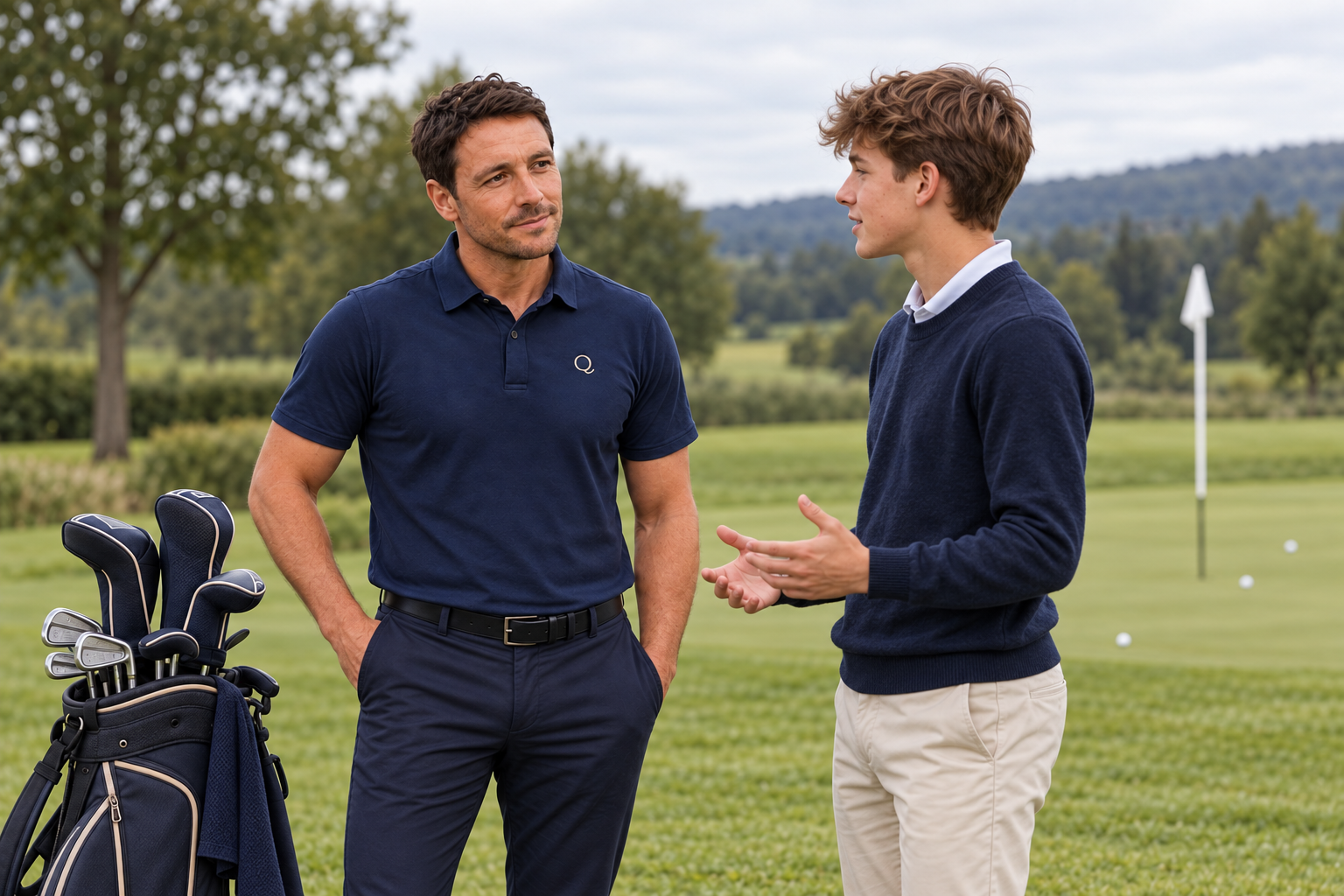
You organise transport, listen, encourage and may also share the costs and uncertainty. As a parent or close supporter, you are an important part of everyday golf. Good support also gives a young person room to gain their own experience.

You can build a reliable relationship and create supportive conditions. Show interest, listen and seek support when it is needed. Playing the game belongs to the child. Technical training decisions belong with the responsible coaches and should increasingly involve the child. Your role gives young golfers a dependable foundation while leaving them room to take part in their own development.
None of these roles can guarantee a result. In a specific situation, ask yourself: Does my child need connection, help with organisation, an open question or specialist support? Do I want to help, or am I mainly trying to resolve my own uncertainty as quickly as possible? Taking a moment to consider this helps you choose support that fits what your child needs right now.
A disappointing round does not need an immediate analysis. First ask: “Would you like to talk about it or have some quiet time?” If your child wants to talk, begin openly: “How did you experience the round?” Leave room for the answer and check your understanding before sharing your view. You can acknowledge the disappointment without turning it into a judgement about their entire game.
Even unspoken expectations can be felt. Separate your hopes from what your child wants to achieve. In a calm moment, discuss what support helps: When do they want to talk about golf? What should happen first after a tournament? Which questions do they want to decide for themselves? A few specific agreements provide more guidance than constant advice and reminders.
Independence grows through personal decisions and experience. Leave your child tasks that suit their age and remain available. You do not need to prevent every mistake. Safety concerns, disrespectful behaviour or ongoing overwhelm do, however, call for clear support. An honest result can stand, even when it is difficult. Your role is not to rescue the score.
In a calm moment, ask your child: “How do you know I am supporting you?” Listen and agree on one specific thing for the next training session or tournament. Later, review together whether it helped. shanQ offers content about expectations, communication and personal responsibility to help you reflect on your role. Conversations with your child and their coach remain central.